
How to Put Siding Up
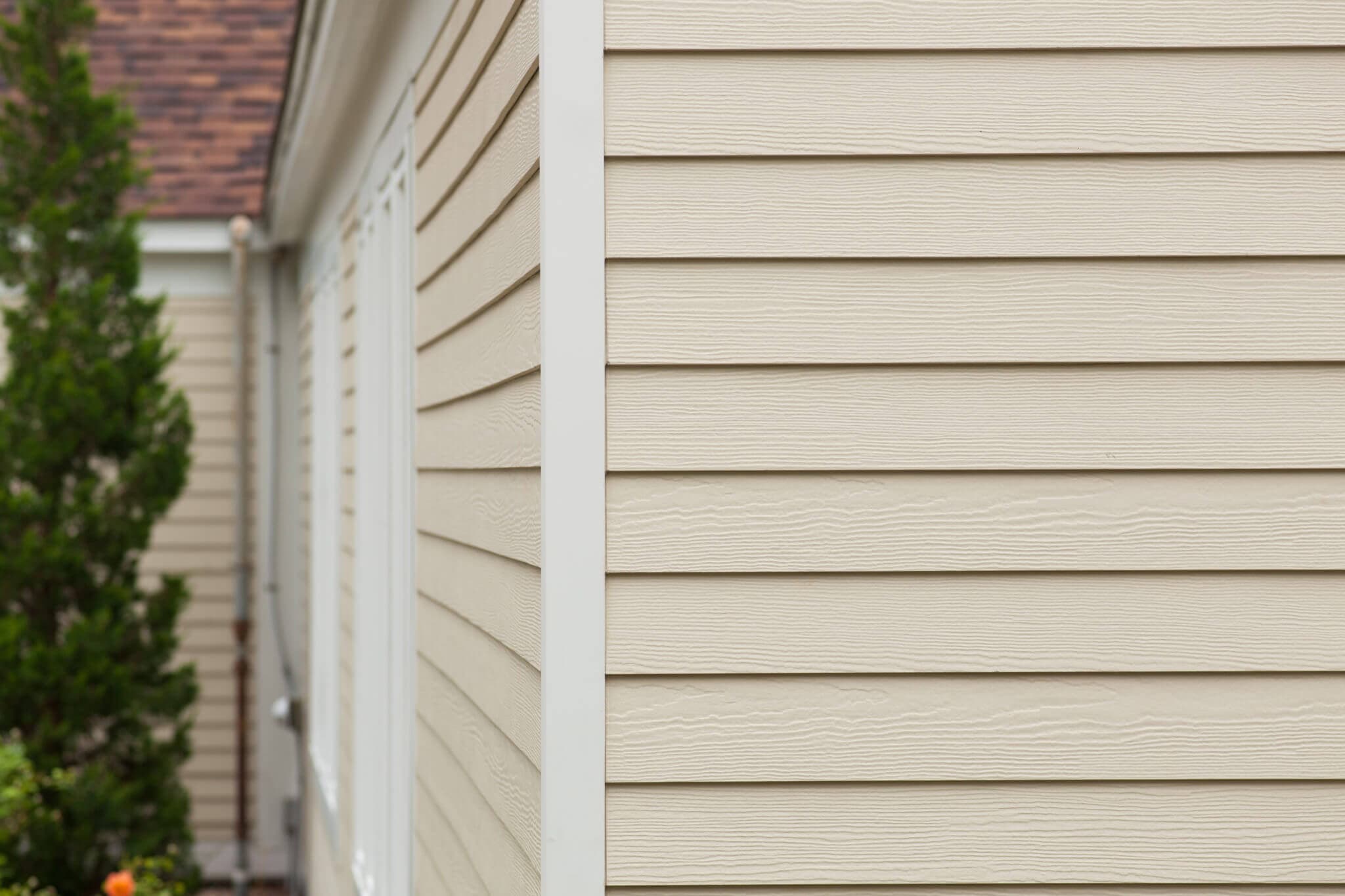
How to put siding up is a bigger question than which color. The wall has to shed water before it looks finished. Vinyl, lap, or fiber cement — we hang all three the same way underneath: dry sheathing, wrap, window pans, kickouts, then the face.
The order that keeps the wall dry
- Pull what is failing. Overlaying a rotten or wavy wall just prints the problem.
- Replace soft sheathing. Price the sheets before the dumpster leaves. That is the conversation we have on elevation jobs.
- House wrap, lapped shingle-style. Tape the seams the wrap manufacturer calls for.
- Sill pans and head flashing at every window and door. Vinyl J is not a pan.
- Kickout flashing where a roof dies into a wall. Skip this and you buy the same stain next spring.
- Inside and outside corners, starter, then courses. Work from a level line, not from the old dirty edge.
- Soffit and fascia last if they are in the scope. Do not trap a drip edge under a new J.
What changes by material
- Vinyl — hang in the slots, never tight. See how to install vinyl siding.
- Fiber cement — face-nail or blind-nail per the board. Heavier. Cut outside. What fiber cement is.
- Wood or engineered lap — prime every cut end. Nebraska sun will raise the grain on a raw butt joint in one season.
DIY vs a crew day
A detached shed or a one-story garage gable is a fair owner job if the wrap is already right. A two-story Omaha elevation, a color that has to match stone, or a claim photo set — that is a crew. We do not advertise 24/7 siding. Call the shop. We schedule the elevation and tarp the roof opening if that cannot wait.
Quick answers
What goes up first when you put siding on a house?
Sheathing repairs, then house wrap and window flashing, then corners and starter, then the courses. The face is last on purpose.
Can I put new siding over old siding?
Sometimes on a flat, well-fastened wall with enough window reveal. Rot, waves, and a leaky window mean pull it. Overlaying hides the leak.
How long does it take to put siding up?
A simple one-story elevation can be a day. A two-story house with wrap, windows, and trim is usually two to four days of weather.
Want someone to actually look at it?
Free inspection, photos of whatever we find, and a written recommendation — including “this roof is fine, call us in five years.”