How to Replace Roof Shingles
If wind or impact took a small area, knowing how to replace roof shingles can keep water off the deck. This is only for a handful of broken asphalt shingles on a dry, accessible, low-slope roof.
Before you set a ladder, look for ceiling stains, wet spots on the underside of the boards, and daylight through the deck from the attic. If you cannot tell why it failed, Kutsch Roofing can say whether this is a repair or a bigger structural problem.
When a shingle repair is appropriate
Repair is appropriate when a few shingles are cracked, torn, or missing and the rest of the field is sound. Do not do the work if the roof is steep, wet, icy, high, or next to a chimney, skylight, valley, or vent. Those details depend on flashing. A mistake sends water under the field.
If the same leak keeps coming back, shingles are curling across a wide area, granules are gone, or you can see damaged deck, schedule roof repair. Do not keep patching.
For the Omaha version of “is this even a section,” see how to repair a section of roof.
How to replace roof shingles
Gather the right materials
You need a matching replacement shingle, a flat pry bar, a hammer, galvanized roofing nails, a utility knife, roofing cement, gloves, and fall protection. Match brand, profile, size, and color if you can. A new bundle next to weathered shingles will still look different. Check leftover material, the underside of a tab, or an old warranty packet for the line.
Follow these steps
- Work on a dry, mild day. Heat makes sealant sticky. Cold makes asphalt brittle.
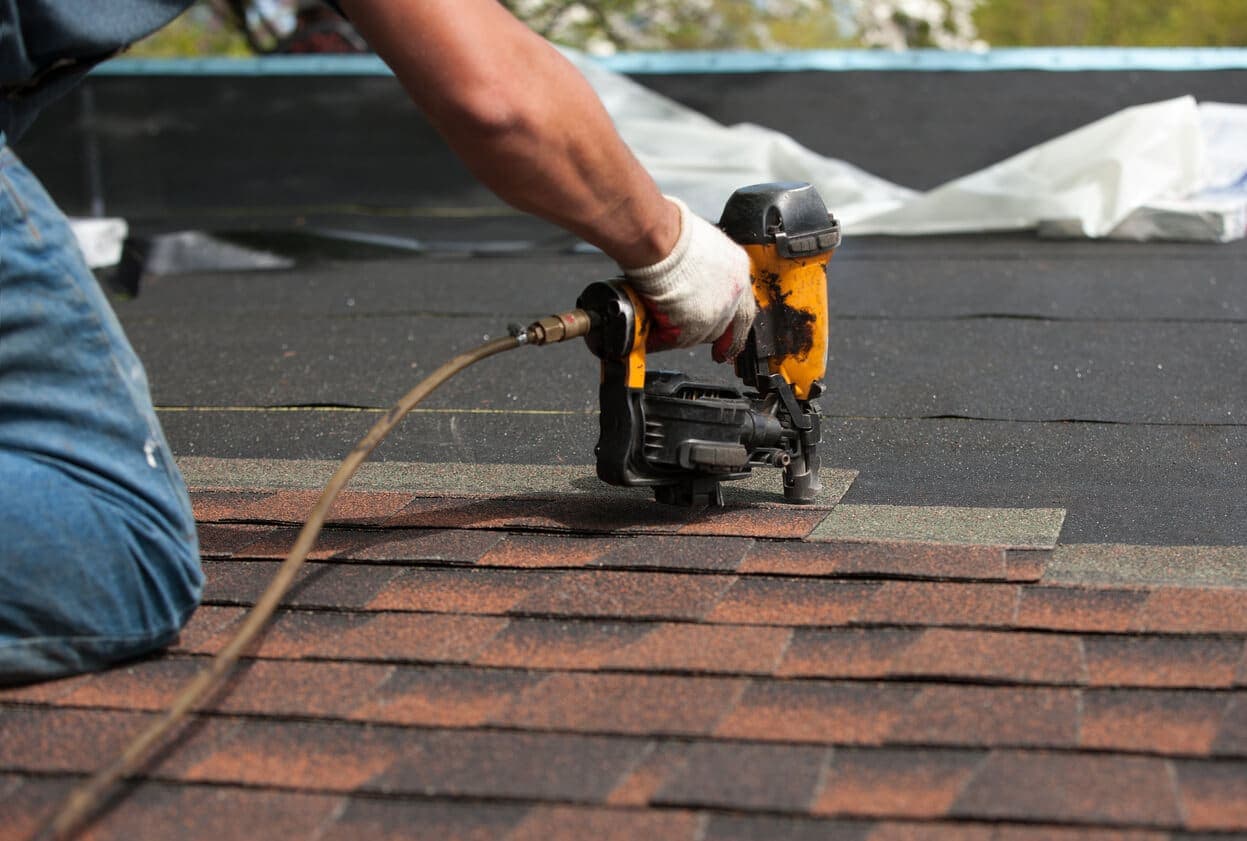
- Break the seal gently. Slide a flat pry bar under the damaged shingle and the tabs above it. Lift only enough to release the adhesive.
- Remove the fasteners. A shingle is held by its own nails and by nails from the course above. Forcing them can tear the underlayment.
- Inspect before covering. Slide the damaged piece out. Soft wood, moisture, failed underlayment, or rusted fasteners mean this is more than a shingle swap.
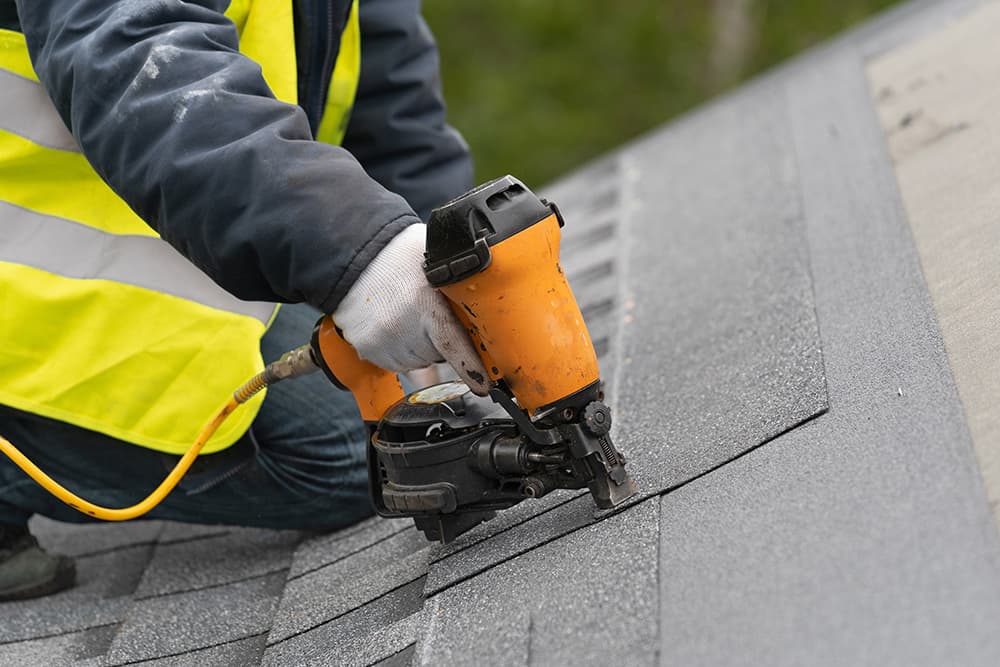
- Install the replacement. Align the exposed edge with the neighboring courses. Fasten only in the manufacturer’s nail line. Count and placement change by product and wind zone.
- Reseal the tabs. Refasten lifted neighbors. Use small, manufacturer-appropriate spots of roofing cement where the seal broke. Extra cement can block drainage.
A small patch can extend the life of a field that took isolated hits. It is not a substitute for failed flashing, rotten deck, or a roof that is simply old.
When to call a professional
If more than a few residential shingles are damaged, the pitch is steep, or the damage sits next to penetrations and transitions, call a contractor. Valleys, vent boots, wall intersections, chimneys, and skylights are water problems, not just broken tabs.
When the existing system is at the end of its life, that is a full roof installation or replacement — deck, moisture protection, ventilation, flashing, and the field installed as a system.
The bottom line
Learning how to replace roof shingles helps on a small repair. Safety and water management come first. Use matching shingles, respect the nail line, look at the exposed deck, and close the seal only where you need to. If the leak repeats, the deck is soft, or the flashing is the real failure, ask for a written inspection. That tells you whether this is a localized repair or a delay on a bigger job.
Quick answers
Can I replace just a few roof shingles myself?
Yes, on a dry, low-slope roof when only a handful of asphalt shingles are damaged and the rest of the field is sound. Stay off steep, wet, or flashing-adjacent work.
Why don’t new shingles match the old ones?
Sun fades the field. Even the same product line looks different next to weathered tabs. Harvest from a back slope if the street side has to match.
When is a shingle patch a waste of money?
When leaks keep moving, granules are gone across the field, the deck is soft, or the damage sits in a valley or against a chimney.
Want someone to actually look at it?
Free inspection, photos of whatever we find, and a written recommendation — including “this roof is fine, call us in five years.”